
FRUIT JUICE PLANT MANUFACTURER
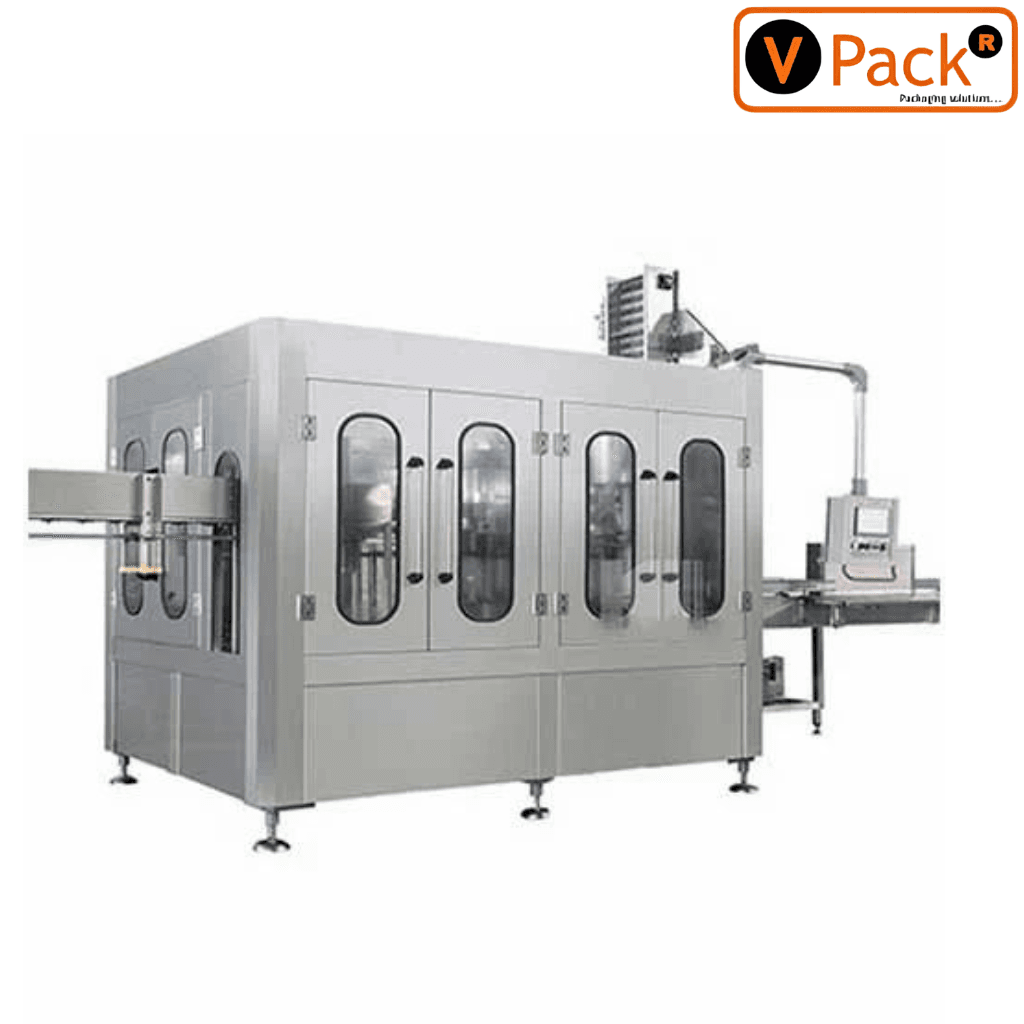
JUICE RFC MACHINE
Rinses, fills and caps juice bottles from 180 ml to 2 litres at a standard 60 BPM, built in SS 304 food-grade steel.
Fruit Juice Plant Manufacturer In Delhi - V Pack Machine
Quick Answer: V-Pack Machine Pvt. Ltd. is a fruit juice plant manufacturer in Delhi. Its juice lines take fresh fruit through pulping, blending, homogenization and pasteurization (200 LPH), then hot-fill bottles from 180 ml to 2 litres on a 60 BPM juice RFC machine and cool them in a cooling tunnel — all built in SS 304 food-grade steel by a team with 14 years of experience.
Technical Specifications
| Specification | Value |
|---|---|
| Standard capacity | 60 BPM (from 30 BPM; higher on request) |
| Bottle size | 180 ml – 2,000 ml |
| Material | SS 304 food-grade |
| Power | 20 kW |
| Supply | 380 V, 50 Hz, three phase |
| Air conveyor | 15 ft |
What Is a Fruit Juice Plant?
A fruit juice plant is a complete production line that turns fresh fruit into sealed, shelf-stable bottled juice. It covers every step — washing, pulping, blending, homogenization, pasteurization, filling, cooling and packing — so the juice is safe, smooth and tastes the same in every bottle.
The heart of the line is the juice RFC machine, which rinses, fills and caps bottles in one pass. The processing machines before it decide the juice quality; the filling and cooling machines after it decide shelf life. As a fruit juice plant manufacturer in Delhi, V-Pack Machine builds both parts of the line in-house.
Fruit Juice Plant Process
- Washing and sorting — removes dirt and damaged fruit.
- Pulping and extraction — the fruit pulper separates pulp from seeds and skin.
- Blending — pulp, water, sugar and additives mixed in SS blending and agitator tanks.
- Filtration — for clear juices.
- Homogenization — uniform texture, no settling.
- Pasteurization — kills microbes while keeping taste; plate or tubular heat exchangers are chosen by juice thickness.
- Hot filling and capping — on the juice RFC machine.
- Cooling tunnel — cools bottles quickly to protect flavour, colour and bottle shape.
- Labeling and packing
Juice is more sensitive than water or soda. It contains sugar and pulp, so microbes grow quickly if any step is skipped, and too much heat changes its taste and colour. The key is balance: enough pasteurization to make juice safe, followed by fast cooling to keep its fresh flavour.
V-Pack Machine's 14 years of experience in beverage machinery go into getting this balance right on every juice line.
Machines in a V-Pack Juice Plant
| Machine | Role |
|---|---|
| Fruit Pulper Machine | Extracts pulp from mango, guava, tomato and more |
| SS Blending Tank | Mixes the juice formulation |
| Agitator Tank | Keeps pulp and syrup evenly mixed |
| Homogenizer | Uniform texture |
| Pasteurizer (200 LPH) | Microbiological safety and shelf life |
| Juice RFC Machine | Rinses, fills and caps |
| Cooling Tunnel Machine | Cools hot-filled bottles |
Juices and Drinks You Can Make
| Category | Examples |
|---|---|
| Pulpy juices | Mango, guava, papaya |
| Clear juices | Apple, grape, pomegranate |
| Citrus | Orange, lemon, pineapple |
| Blends | Mixed fruit |
Pulpy juices like mango and guava need a pulper and homogenizer so the drink stays smooth and does not separate on the shelf. Clear juices like apple and grape need good filtration instead. Tell V-Pack Machine which fruits you plan to process, and the line will be configured for them.
How to Start a Fruit Juice Plant: Step by Step
Starting a juice business takes planning beyond buying machines. Working with an experienced fruit juice plant manufacturer in Delhi like V-Pack Machine keeps each step on track.
- Pick your products — choose the fruits and pack sizes (180 ml to 2 L) that sell in your market.
- Get licences — an FSSAI licence is required for fruit beverages, along with GST registration and State Pollution Control Board consent where applicable.
- Plan space and utilities — lay out areas for processing, filling, cooling and storage, and plan power, water and steam supply for the pasteurizer.
- Select machines — fruit pulper, blending and agitator tanks, homogenizer, pasteurizer, juice RFC machine and cooling tunnel, sized to your daily output.
- Install and train — V-Pack Machine installs the line and trains your operators on hygiene.
- Run trial batches — test taste, colour and shelf life before full launch.
Who Uses V-Pack Juice Plants
Buyers who choose V-Pack Machine as their fruit juice plant manufacturer in Delhi include beverage startups, established juice brands, dairy and food processors, contract manufacturers and export units. V-Pack's clients include dairy and beverage companies such as Paras Dairy and DS Group.
About V-Pack Machine — 14 Years of Experience
V-Pack Machine Pvt. Ltd. is a fruit juice plant manufacturer in Delhi with 14 years of experience in juice, beverage and water machinery. Every pulper, tank, homogenizer, pasteurizer and RFC machine is built at the company's factory in Pooth Khurd, New Delhi, in SS 304 food-grade steel.
With more than 3,000 installations across India and abroad, V-Pack supports juice businesses from the first trial batch to full production.
Start Your Fruit Juice Plant with V-Pack Machine
FAQs
1. What is a fruit juice plant?
A fruit juice plant is a complete line that converts fresh fruit into packaged juice through washing, pulping, blending, homogenization, pasteurization, filling and packing.
2. Who is a fruit juice plant manufacturer in Delhi?
V-Pack Machine Pvt. Ltd., New Delhi, manufactures fruit juice plants with a fruit pulper, blending tanks, homogenizer, 200 LPH pasteurizer, 60 BPM juice RFC machine and cooling tunnel, all in SS 304.
3. What licences are needed to start a juice plant?
An FSSAI licence is required to make and sell fruit beverages in India, along with GST registration and State Pollution Control Board consent where applicable. V-Pack Machine provides a plant layout that you can use for these applications.
4. What bottle sizes can V-Pack's juice RFC machine fill?
V-Pack's juice RFC machine fills bottles from 180 ml to 2 litres at a standard 60 bottles per minute.
5. Why is pasteurization needed for juice?
Pasteurization heats juice to kill harmful microbes and extend shelf life while keeping its taste. V-Pack supplies a 200 LPH pasteurizer for juice lines.
6. Why use a cooling tunnel after filling juice?
Juice is often hot-filled. A cooling tunnel brings bottles down to room temperature quickly, protecting flavour, colour and bottle shape.
7. Which fruits can a V-Pack juice plant process?
V-Pack juice plants process mango, orange, guava, lemon, pineapple, apple, grape, papaya, pomegranate and mixed fruit.